Vienna 1900: Art Nouveau and Otto Wagner
The birth of modernism from the Secession to the city railway
 TopicWien
- Duration
- 2.0 hours
- Languages
- German, English
Around 1900 Vienna was a laboratory of modern ideas. This walk shows how architects and artists reimagined the imperial capital.
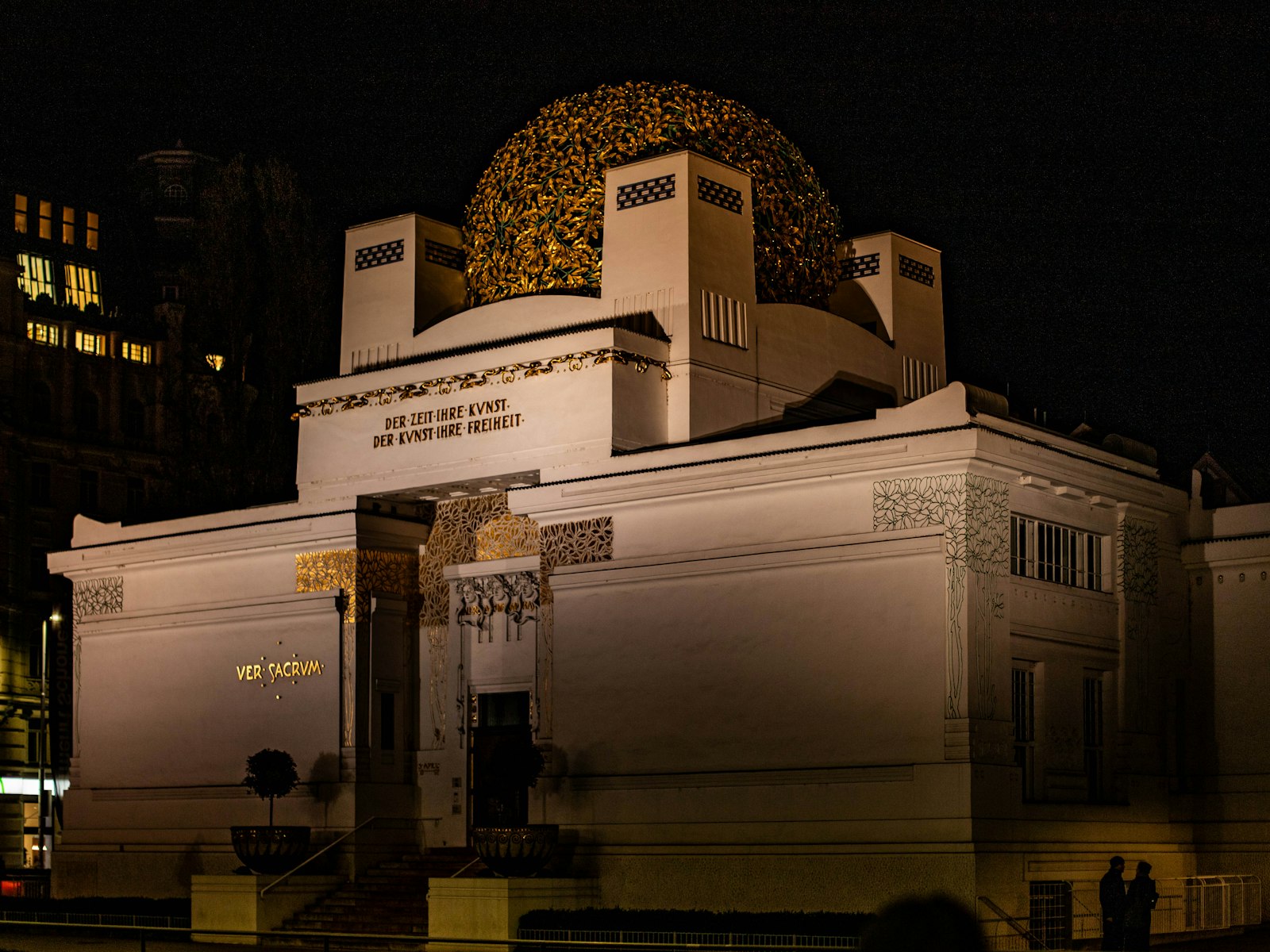
The Secession building with its golden dome of laurel leaves is the manifesto of artists who broke away from the academic establishment in 1897. Their motto above the door reads: To every age its art, to art its freedom. From here you follow the traces of Klimt, Olbrich and Otto Wagner.
Wagner shaped the cityscape like no one else. His railway pavilions on Karlsplatz, the Majolica House on Linke Wienzeile and the Postal Savings Bank show how function and beauty can meet. Your guide explains the materials, ornaments and ideas behind them.
On request we continue to the Church at Steinhof, a masterpiece of Viennese Art Nouveau. The tour is private and priced per group.
Highlights
- The Secession and its golden dome
- Otto Wagner's railway pavilions on Karlsplatz
- Majolica House and Linke Wienzeile
- Postal Savings Bank, a landmark of modernism
- Optional: Church at Steinhof
The route
-
1Secession
Exhibition hall of the Vienna Secession, built in 1897 and 1898.
-
2Karlsplatz
Wagner's railway pavilions with a view of St. Charles Church.
-
3Linke Wienzeile
Apartment buildings with majolica tiles and golden medallions.
-
4Postal Savings Bank
Wagner's bank building in aluminium, glass and marble.
Who this tour is for
Ideal for lovers of architecture and art, and for returning visitors who want to look deeper.
Frequently asked questions
Are entrance fees included in the price?
No. Entrance fees, for example for the Secession or the Church at Steinhof, are not included.
How much walking is involved?
About three to four kilometres at a relaxed pace. Some stretches can be covered by subway or tram.