
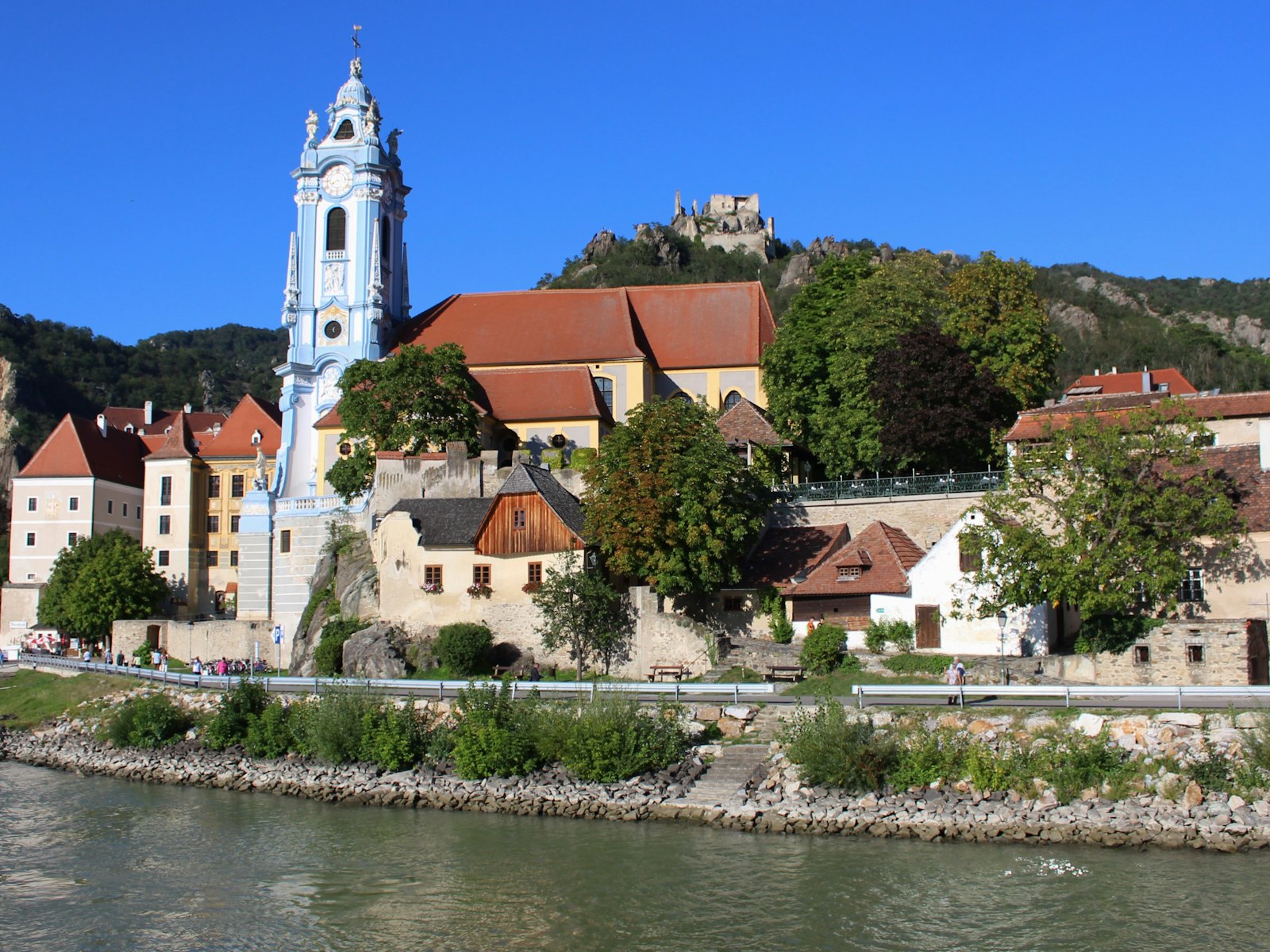
The short answer: In the Wachau Valley, see Melk Abbey, the village of Dürnstein with its castle ruin and blue church tower, the wine villages of Spitz and Weissenkirchen and the old town of Krems. One day covers the highlights by boat, coach or bike, two to three days leave time for hikes and wine tastings. The Wachau is at its best during apricot blossom in spring and the grape harvest in fall.
Top Sights in the Wachau
The Wachau is the stretch of the Danube valley between Melk and Krems in Lower Austria. Steep vineyard terraces, castle ruins, abbeys and old wine villages shape a landscape that has been a UNESCO World Heritage Site since 2000. Vienna is only about an hour's drive away.
Melk Abbey
This Benedictine abbey sits on a rock above the Danube and is one of the most important Baroque monasteries in Europe. Jakob Prandtauer designed the rebuilding in the 18th century. Highlights include the abbey church, the library and the terrace with views over the valley.
Dürnstein
According to tradition, English King Richard the Lionheart was held captive in the castle above the village in 1192 and 1193. The blue and white tower of the abbey church is one of Austria's most photographed sights.
Spitz, Weissenkirchen and Aggstein
Spitz lies at the foot of the Tausendeimerberg, the "thousand bucket hill" named after its rich harvests. Weissenkirchen has a fortified medieval church. Across the river, the ruins of Aggstein Castle are wrapped in legends of robber knights.
Krems and Stein
Krems is the eastern gateway to the Wachau, with a well preserved old town, the Steiner Tor gate and an art mile with several museums. On a hill across the river stands Göttweig Abbey, often called the "Austrian Montecassino".
How Much Time Do You Need?
- 1 day: Melk Abbey, a boat ride to Dürnstein and a stroll through Krems.
- 2 days: add Spitz, Weissenkirchen, a wine tasting and Aggstein Castle.
- 3 days or more: sections of the World Heritage hiking trail, a ride on the Danube bike path and Göttweig Abbey.
Best Time to Visit
In late March or April the apricot blossom turns the slopes white and pink, with the exact timing depending on the weather. Wachau apricots ripen in July. September and October are harvest season, when wine taverns open and vineyards turn golden. In winter the valley is quiet and many businesses close, so April to October is the best season.
Practical Tips
- Combine boat and bike: Take the boat downstream and cycle back, or the other way around. Bikes can be rented in many villages.
- Ride a cable ferry: The small ferries crossing the river, for example near Spitz, are an experience in themselves.
- Know the wine labels: Wachau winemakers use the terms Steinfeder, Federspiel and Smaragd, from light to full bodied.
- Taste the apricots: As jam, liqueur or apricot dumplings, the Wachau apricot is a protected specialty.
Explore with a Guide
A licensed guide ties abbeys, castles, winemaking and legends together into one smooth day and plans the right order of boat, coach or bike:
- Wachau: Melk, Dürnstein & Krems
- Stift Melk & Donau
- Dürnstein: Löwenherz und blauer Turm
- Wachau Radtour
- Marillen, Wein und Dürnstein
Families will enjoy the Wachau-Familientag: Burgen, Fähre und Marillen.
Wachau FAQ
Where is the Wachau?
In Lower Austria, along the Danube between Melk and Krems, about an hour's drive west of Vienna.
Can I visit the Wachau as a day trip from Vienna?
Yes, it is the classic day trip. Travel to Melk by coach or train, take the boat to Dürnstein or Krems and return to Vienna in the evening.
When do the apricots bloom?
Usually from late March to mid April, depending on the weather. The blossom lasts from a few days to about two weeks.
What wines come from the Wachau?
Mainly Grüner Veltliner and Riesling from the terraced vineyards. The Wachau ranks among Europe's most renowned white wine regions.
Plan Your Wachau Tour
Experience the Wachau with a licensed guide: book your tour or contact us for a custom day. More information at Danube Lower Austria.